
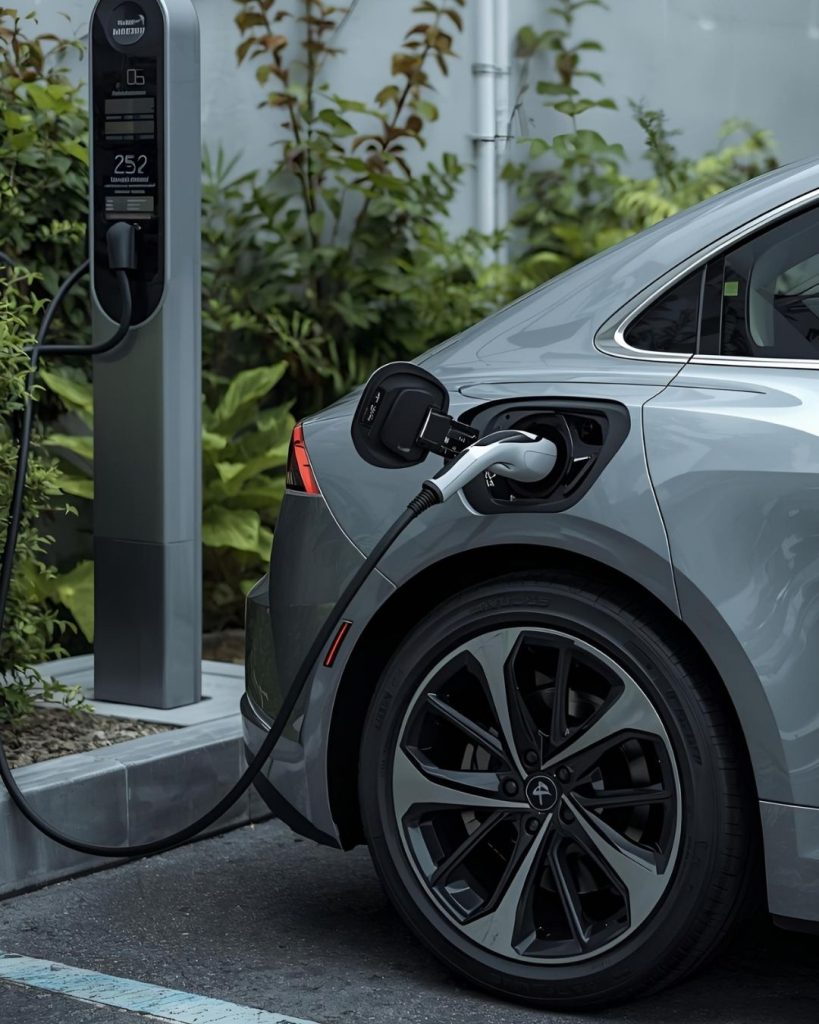
How Much Does an EV Charger Installation Cost in Ipswich?
Home EV charger installations have become one of the most requested electrical jobs across Ipswich over the past two to three years, and the pace of uptake shows no sign of slowing. As more households in the town switch to electric or hybrid vehicles — whether through personal choice, workplace schemes or the gradual tightening of new petrol and diesel car availability — the question of how to charge at home moves from something theoretical to something that needs sorting out practically.
Ipswich has a housing mix that suits home charging well in many cases. The detached and semi-detached properties across Rushmere St Andrew, Kesgrave, Tuddenham and Westerfield typically have off-street parking and garages that make installation relatively straightforward. The older terraced housing closer to the town centre, across Clapgate Lane, Norwich Road and parts of Whitton, is more varied — some properties have driveways, others do not, and the absence of dedicated off-street parking changes the picture considerably.
This post covers what a home EV charger installation costs in Ipswich, what type of charger makes sense for most households, what affects the final price, and what you need to know before booking an electrician.
What Does an EV Charger Installation Cost in Ipswich?
For a standard home EV charger installation — a 7kW smart charger fitted to a property with off-street parking and a reasonably modern consumer unit — the installed cost in Ipswich currently runs between:
- Straightforward installation (short cable run, modern consumer unit): £750–£1,100
- Standard installation (average cable run, minor consumer unit work): £1,000–£1,500
- More involved installation (long cable run, older consumer unit, garage or outbuilding): £1,400–£2,200+
These prices include the charger unit itself, all cabling, any necessary consumer unit work, the mounting bracket, weatherproofing, testing and certification. They do not include significant electrical upgrades such as a full consumer unit replacement — if that is needed, it is typically quoted separately.
Ipswich sits broadly in line with the Suffolk and wider East Anglian market for electrical labour — noticeably more affordable than the Home Counties, and below the national average for the South East. For IP1 to IP4 postcodes and the surrounding area, the figures above are a realistic guide.
Charger Types — What You Actually Need
Slow Charging (3kW)
A standard three-pin plug socket delivers around 3kW of power — enough to add roughly 10 to 15 miles of range per hour of charging. For most electric vehicle owners, this is too slow to be practical as a primary charging method. If you drive 30 to 40 miles a day and need to top up overnight, a 3kW supply requires 8 to 10 hours to fully recharge many current EVs from a meaningful level of depletion.
A three-pin plug also puts sustained load on a domestic socket that was not designed for it. Using one occasionally is fine. Relying on it nightly for EV charging is not recommended and can cause damage to the socket over time.
Fast Charging (7kW) — The Standard Home Choice
A 7kW wall-mounted charger is what the vast majority of Ipswich homeowners install, and for good reason. It adds roughly 25 to 30 miles of range per hour, meaning most EVs can be fully charged overnight from a typical daily depletion level. It requires a dedicated circuit from the consumer unit, a competent person installation, and registration with the Distribution Network Operator — all of which a registered electrician handles as part of the job.
Most 7kW chargers available today are smart chargers — they connect to your home wifi, allow you to schedule charging during off-peak electricity tariff periods, and can be monitored and managed via a smartphone app. For anyone on an EV-specific electricity tariff, the ability to schedule overnight charging at lower rates makes a meaningful difference to running costs over time.
Rapid Charging (22kW)
A 22kW three-phase charger is considerably faster but requires a three-phase electricity supply, which most domestic properties in Ipswich do not have. Checking whether your property has single or three-phase supply is straightforward — your electrician can confirm this from the consumer unit — but for the majority of homeowners, 7kW is both sufficient and the only realistic option without significant additional infrastructure work.
What Affects the Installation Cost?
Cable Run Length
The distance between your consumer unit and the intended charger position is one of the main variables in the installation cost. A charger mounted on the wall of an integral garage directly adjacent to the consumer unit involves a short cable run and minimal disruption. A charger at the far end of a detached garage, or mounted on an external wall at the opposite end of the house to the consumer unit, requires a longer cable run — either surface-mounted in trunking, buried underground, or routed through the fabric of the building.
Longer cable runs mean more material and more labour. A run of 20 metres or more will add meaningfully to the cost compared with a 3 to 4 metre run on a straightforward installation.
Consumer Unit Capacity and Condition
Adding a dedicated EV charger circuit requires a spare way in the consumer unit. Most modern consumer units have capacity for this without any modification. Older units — particularly rewireable fuse boards or early RCD boards — may not have a suitable spare way, or may not be safe to add a new circuit to without replacement or upgrade.
If your consumer unit needs to be replaced or upgraded to accommodate the charger, this adds cost to the project. A consumer unit replacement in Ipswich typically costs £380–£620 fitted. It is worth having your electrician assess the board before quoting to avoid any surprises.
Off-Street Parking and Charger Position
Properties without a driveway or dedicated off-street parking cannot install a home charger in the conventional sense — there is nowhere to mount it that allows the cable to reach a parked vehicle safely. This is a genuine constraint for a number of properties in central Ipswich, particularly the terraced streets off Norwich Road, Bramford Road and parts of the Westgate ward.
Some local authorities have introduced on-street charging infrastructure programmes to address this, and Ipswich Borough Council has been active in expanding public charging provision across the town. However, on-street public chargers are a separate conversation from home installation — if your property lacks off-street parking, a home charger is not currently a practical option.
Trunking, Groundworks and Routing
Where the cable needs to cross a garden, a path or a driveway to reach the charger position, it either needs to be buried in a duct at the appropriate depth — typically 450mm under soft landscaping, 600mm under driveways — or routed overhead or around the perimeter of the property in surface trunking. Groundwork for a buried cable run adds cost, particularly across larger gardens or where the path surface needs to be lifted and reinstated.
For properties in Kesgrave, Martlesham and the newer developments east of Ipswich where garages are often detached from the house and set back from the building, this is worth discussing at the quoting stage so the cable route is planned before the work starts rather than improvised on the day.
Smart Charger Features and Brand
The charger unit itself accounts for a portion of the overall installation cost. Most installations use units from established manufacturers — Ohme, Hypervolt, Myenergi Zappi, Easee and Pod Point are among the most commonly installed in Suffolk. Prices vary between brands and models, typically ranging from £300 to £700 for the unit alone.
The Zappi charger, made by Myenergi, is particularly popular among homeowners with solar panels — it can be configured to prioritise charging from solar generation rather than drawing from the grid, which makes a meaningful difference to running costs for properties with existing solar PV. If your Ipswich home already has solar panels, it is worth discussing this with your electrician at the quoting stage.
Is There a Grant Available?
The EV chargepoint grant for homeowners — previously known as the OZEV grant — provides a contribution of up to £350 towards the cost of installing a home EV charger for eligible properties. As of early 2026, the grant applies to flat owners and renters rather than homeowners in houses, following changes to the scheme’s eligibility criteria. If you live in a flat or are a tenant, it is worth checking current eligibility with your electrician or directly with the Office for Zero Emission Vehicles before booking.
For homeowners in houses, the grant is no longer available under the current scheme, though eligibility criteria have changed more than once and it is worth confirming the current position at the time you are arranging the installation.
Does an EV Charger Installation Need Building Regulations Approval?
Yes. A home EV charger installation is notifiable work under Part P of the Building Regulations. It must be carried out by a registered competent person — an electrician registered with NICEIC, NAPIT, ELECSA or an equivalent scheme — who can self-certify the work and notify building control on your behalf.
In addition to Part P, EV charger installations since 2022 must comply with the Electric Vehicles (Smart Charge Points) Regulations, which require all new home chargers to be smart-capable — able to communicate with the grid and respond to demand signals. Any installer offering a non-smart charger is not compliant with current requirements.
Always ask for the installation certificate on completion. You will need it if you come to sell the property, and it confirms the work has been done to the required standard.
Getting an EV Charger Installed in Ipswich
If you are based in Ipswich, Kesgrave, Rushmere St Andrew, Woodbridge, Stowmarket, Hadleigh or anywhere across Suffolk, we are happy to come out and assess your property, advise on the best charger position and cable route, and give you a clear, fixed price for the installation. Get in touch to arrange a visit.